
Interview by Mikko Polus
Edge Of Decay is a Finnish project that has history dating back to 2012. If we look at the main man Olli Tanskanen’s earlier noise projects, we could date his noise history to start a few years earlier. Although the artist is also active under some other monikers, Edge Of Decay has remained steadily active throughout its existence, having made very small-scale releases as well as pro-CDs that are more easily avalable for the masses.
The live duo lineup of Edge Of Decay was interviewed for the Special Interests Documentary video series in 2019, and Olli Tanskanen was interviewed for the SI website about his noise documentary Melun Maa in 2023. Despite that, I thought it’d be good to catch up on his later releases.
If we look back to 2024, the Freak Animal-published cassette Haute Couture could be used as an example of the “basic form” of Edge Of Decay. In its description, the publisher advertised the works of Edge Of Decay as harsh and blunt noise. That remains a fact here, as what you get is highly distorted sounds of junk metal abuse paired with equally crude pedal harshness. The tape also employs various types of warbling and phasing effects to create some cleaner but also more disorienting sounds amidst the rugged wreckage. The sparingly offered slow metallic ringing in the tape’s title track and closing track is particularly tasty.
Someone could call this industrial harsh noise due to the effect choices and the heavy presence of metals. You can agree or disagree, but either way, elements of industrial are not a rare occurrence in the project’s output.
The tape’s four tracks are compositionally fairly straightforward pieces of harsh noise. They start by choosing a style and direction, and remain on the same route for their length. That said, they’re active and vivid instead of monotonal, and all the tracks are clearly different from each other, so this is not some one-dimensional affair. It’s thoroughly rugged but offers clear characteristics.
Edge Of Decay doesn’t have rigid themes, but there is certainly an emphasis on the broken, ugly, decaying and malfunctioning things. Something hidden or lurking behind the sleek surface. So while the project is not themed on just random stuff, its themes still allow a lot of wiggle room to do and explore different things.
This brings me to my main question about Haute Couture: what’s the idea behind the title and the vintage fashion photos? Edge Of Decay doesn’t really have a set aesthetic, but even in that context the graphics feel odd. Then again, at least they’re confusing in a way that makes you notice the tape.
I have always been intrigued by the fashion industry in some sense. I guess something in its hollow beauty fetishisation of human bodies feels interesting. And who doesn’t like beautiful people in tight dresses.
”Haute Couture” started as I had the idea to try have some old catwalk or fashion style audio samples in my noise tracks. That did not work so well after I tried it. So I just kept the visual side of the ” Haute Couture”. It gives some contrast to the audio side. Most of the noise art is pretty ”samey” and copy-paste these days so it’s nice to try something different here and there. You don’t always have to be an edgelord even if your name is Edge of Decay!
The same year saw Edge Of Decay collaborate with the also Finnish noise maker Kitu, and the fruits of this collaboration were published as a pro-tape titled Nocturnal Dolours by the Portuguese label Narcolepsia. The tape is adorned with excellent bio-mechanical artwork by André Coelho that suits the sounds and even goes beyond them.
The tape begins as a mixture of rough harsh noise and cleaner and more experimental pedal noise in a way that could be said to be a very straightforward 1+1=2 combination of the main EOD and Kitu elements. While it’s by no means bad, I think its beginning is the least interesting part of the tape. The track soon becomes a more vivid mixture of harsher and more clean and warbling sounds. The combination is harsh industrial noise that doesn’t really change style, but rather just evolves and mixes the same elements more interestingly over its length.
The flipside starts with a more abstract mesh of quite boldly suffocated and whirring flanger-ambient and semi-muted junk noise screeches. A lot is happening on a more abstract level, some rhythm appears, and the track slowly grows more intense by gradually letting the sounds breathe and clash more freely. The final track is the shortest and feels to be between the earlier two. It’s a mass of rugged harshness that has some more controlled, clean and rhythmic electronic sounds intercept its seams and making it something new and more powerful. As the slow-paced drone rhythms and hectic metal object sounds clash, the tape ends on a both calm and intense note.
The tape has remained captivating for quite a few listens already, and seems it’ll remain so for many more to come. In the context of this interview, its main message is how versatile and adapting Edge Of Decay can be if the situation and possibilities call for it. It was also one of the main reasons I thought about making this interview and having it focus on the project’s various different facets.
Do you remember how this collaboration came to be? Were you intentionally trying to create something else than “the usual deal” with your output, or did it just turn out that way?
I have known Sami (Kitu) for some years and we have played in same events. He has always been great and easygoing guy. So we just had idea to combine our sounds and see how it works. I don’t think we had very strict plan or idea before we started recording. We just exchanged some audio material / files and I tried to mix it all well together. I think that release is good. We did one gig together in Helsinki and I think that worked great. We might do something again sometime later.
You’ve done multiple collaborative releases since this one was published. Was the tape like a spark that fueled you to make more collaborative releases in the future, or is this just a coincidence?
Edge of Decay sound is easy to mix & collaborate with lof of different artists. Much more than my other projects like Vigilantism. It has been nice to try to create something unique and different with other people. Combine forces and sounds and see what is the outcome. I have not been recording in the same space with other acts. We just send files to each other and work with them. That is why it’s been so easy to try these things with people who don’t live close or even in Finland.
Of course it would be nice to record material in the same space but this works fine as compromise.
I don’t know what really was the biggest inspiration to start working more as collaboration in recent years but is has been very rewarding to try creating something new with other people. Anyway, I have done some collaboration work before too like our noise project Lusters which combines Finnish Circle of Shit and Edge of Decay. Lusters just released its first full length album via Abhorrent A.D.
You also published an anti-record on New Approach Records in 2024. In addition to the physical object, it came with a two-track CD-R. The label was interviewed about their anti-records for issue #17 of Special Interests.
Next year, you had a cassette titled Seized For Serenade out on the Canadian label Bent Window Records. I think that tape is one of the most fiercely raw works that you have done, which is emphasized by both of the tracks nearing 20 minutes in length. The tape also features some really raw vocals which is unusual for the project. Did I understand correctly that this would’ve been made with a more stripped-down and primitivist setup than usual? Were the two tracks done in a single take, vocals and all?
Yeah, they were one take recordings in my bedroom. Sorry neighbors, hah.
That time recording worked with only some junk metal piece with a contact mic attached. When I tried that setup it also sounded great with vocals. So I just went to primal mode and recorded me going wild. You never know when random junk metal works great as microphone too hah…
Many times I try to create something new and different with my recordings. Not just a new track but more like ”a new vibe” in Edge of Decay style. In my head that release is ”broken and drunk man screams and breaks things” kind of vibe. In film that release would be something like The Golden Glove (2019) or Paha Maa (eng: Frozen Land, 2005).
The same year Freak Animal published your collaborative CD with Rotat. The CD is titled Caveman Jenkem, and features two almost 20-minute tracks of raw and dirty noise. It has a lot of physical source sounds that get mangled by your arsenal of pedals and other gear, making it a mixture of highly physical and clearly electronic. You didn’t just rely on “safe sounds” either, as the opener has some near-glitchy digital distortion going on that teeters on the border of being just annoying and being pretty damn dirty and ugly. You also had me look up what jenkem means, so thanks for that tasty mental image.
I’m sure you and mr. Rotat have met each other in various gig circumstances, but how did you come to work on a collaborative record? I assume it was a mail collaboration, but did you have separate “duties” for what type of sounds or gear each of you handled? For example, did either of you have more responsibility for the physical objects like metals and glass, or was it all shared?
We have seen each other many times at noise shows and played same events. I really like the Rotat style of noise. Very primal and nasty sounds! If I remember right I just sent him a message asking should we try do something together.
I think the start was that Tero (Rotat) sent me a long track where he just smashes something with an excavator. I mean really with a real excavator hah! We did not have any specific plan about our material but I think we both are so familiar with each other’s material that it was pretty easy to think how these would combine in the end. Sounds in that recording are a mix of many things getting destroyed and smashed to pieces. I think I described my work in that record as metal junk wankery.
For working side it was ”file swap” because we live so far away from each other.
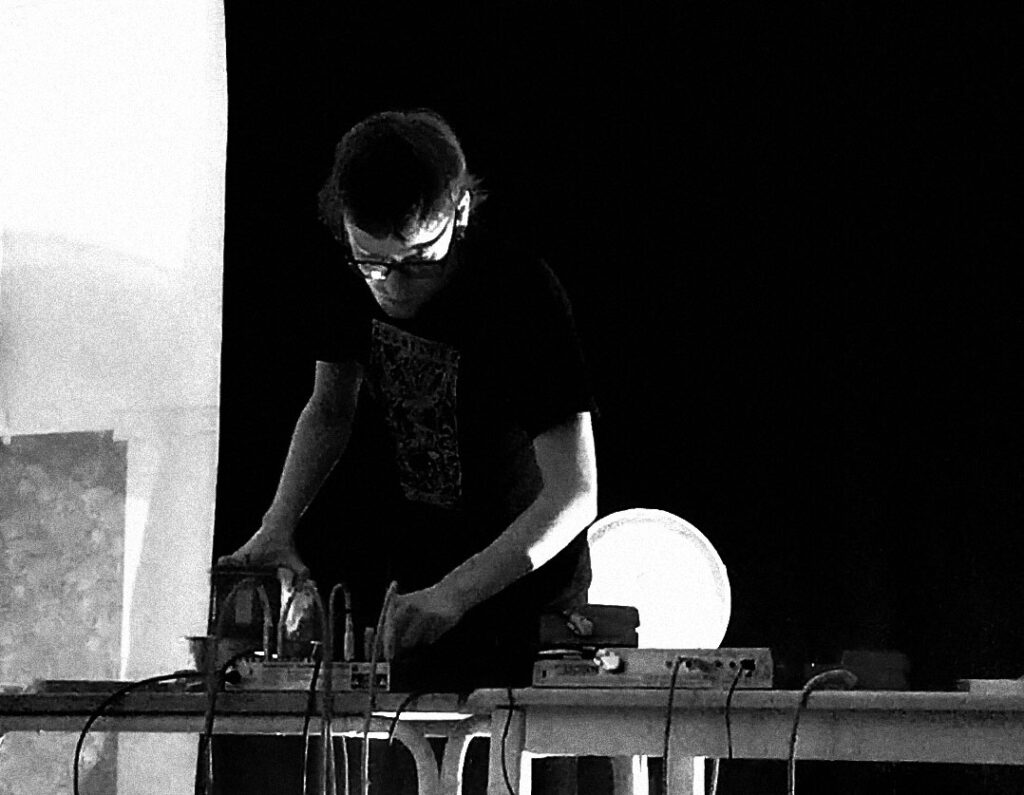
While it’s not a release by Edge Of Decay, I might as well bring up the Mass Hysteria CD that came out in 2025 also through Freak Animal. It had you collecting source sounds from various Finnish noise makers and arrange and orchestrate their contributions into one continuous 46-minute track. I know I am not alone with the opinion that the disc sounds like a solid and unified work, which is surprising considering that all its parts were recorded entirely separate from each other.
How did you come up with the idea for this disc, and what kind of contributions did you request from the participating artists? How did you edit and mutate these contributions to create an unified whole like this?
This one was an idea that I had been thinking about a long time. The idea was to ask raw material tracks from many artists and try to combine them in an interesting way. Only thing I asked was to not include vocals or very clear sounding rhythm/beat in the sent material. When I got all the material from the artists and heard it, I really did not know what it would become. But when I started to work with the material it somehow was quite easy to to compile the whole thing. After I had the all the tracks in right places, I did some mixing and equalization to get all the sounds fit better together. Finally, I dubbed the full track onto a tape to get all the parts to have the same somewhat ”analogue feeling”.
I really like the final result of this and have had many people saying the same thing! Mass Hysteria is one thing that I am really proud of. It says if you have some ”big dumb dream” or idea it might even work in the end. Just do what you gotta do and see what happens!
Then we get to 2026 and your split tape with Whiterat that the American label Phage Tapes published in January. This tape features both solo works from both of you makers of raw noise, as well as collaborative material.
Most of your splits and collaborations so far had been made with fellow Finns, but Whiterat is a project from Italy. While you could already be regarded as a veteran of Finnish noise, Whiterat has just a couple of years of history behind it. It seems you’re not building any barriers on not wanting to work with newcomers for example. How did this Whiterat collab come to be?
I had heard Whiterat releases before he asked if I would be interested to work with him. I really like his style of nasty and raw ”no bullshit” noise. That is why I was interested to do it. He has done work with other Finnish acts too. I think his style fits well with the Finnish people.
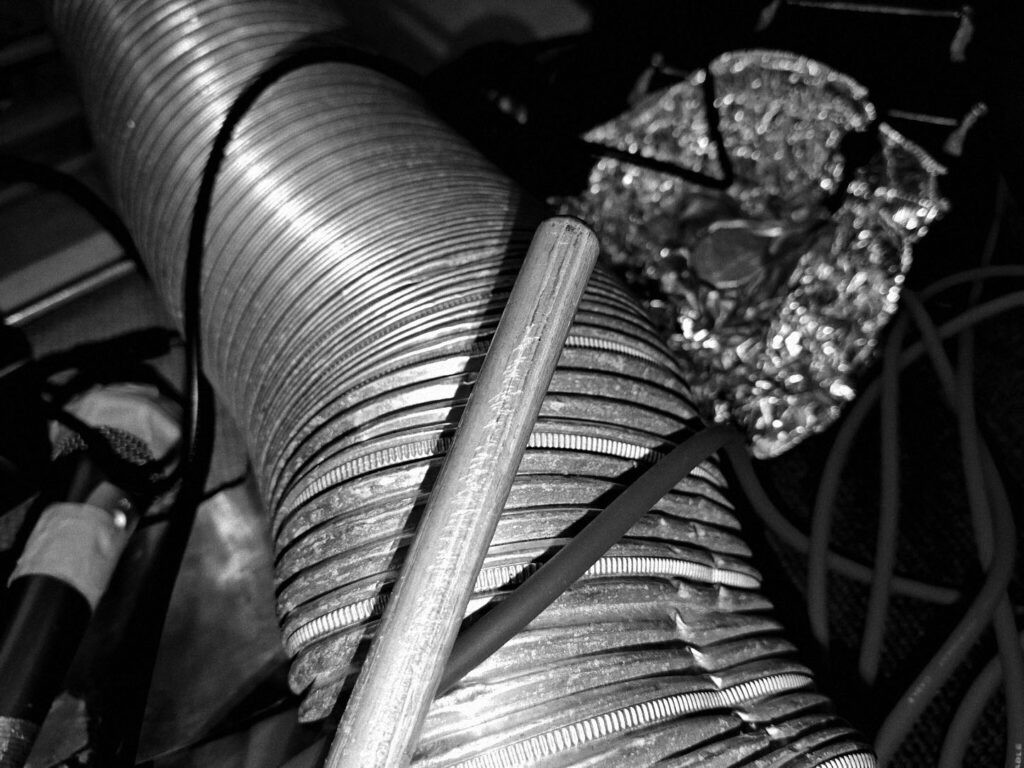
How do you generally decide on who you want to collaborate with and who you don’t? Do you encourage people to contact you if they have an interest in collaborating with you, or do you rather reach out to people yourself?
Mostly I want to work with people that I know or whose material I like. There is not really any big philosophy behind it. I don’t want to say ”don’t contact me if you don’t know me” but it is always easier to start a conversation if we know each other from somewhere. Or just we both know each other’s style and material. But feel free to contact me if you have something in your mind! You never know what happens.
Next up came your split with the Japanese project Scum which Aussaat published on CD in June. Similar to your split with Whiterat, this disc features both solo and collaborative material from both projects. What surprised me with it was how clean and electric Edge Of Decay sounds this time around, and how naturally your output pairs up with Scum’s tracks. Your tracks are still noisy and gritty instead of going all the way back to the electronic noise you did under the Invisible Waves moniker. Still, the at times lazer-like noise is far from the rumbling metals or saturated distortions many might expect from you.
Did you use some very different gear or recording or editing methods than what you’re usually working with, or how did you create these tracks? Did you create these tracks specifically with making a split with Scum in mind, or were they born before you knew where they’d be used?
Really all the material I do for collaboration and split releases is done after we have discussed about it. I don’t want to just use some random tracks that I have done before. That is why some could say those releases sound more ”full” and not just a mix of some random tracks. I don’t remember the exact setup but one synth that I used was Behringer Pro-1. I had this funny idea that I wanted to give my take on ”japanoise” in that material. Maybe somebody can hear some Merzbow or Masonna etc. influences in my part of that release. Anyway that was in my mind when I did my tracks on that album.
Speaking of editing: do you ever use outside mixing or mastering assistance for finalizing your works?
For the mixing and mastering side of my material, I just always try to make my tracks sound good to my ears. Sometimes labels ask if the tracks need any final mastering. Most of the time I just say ”well they sound fine to my ears so I don’t think they need anything”. But I am always open if label thinks my material needs some final touch.
The CD features collage artwork by Aaron Aspinwall. The crudely cut and compiled assemblage of saturated images of nature and destruction make an interesting pair with the cleaner but certainly destructive electronics. Were you familiar with the artist beforehand or was using his artwork a suggestion by Scum or the label?
That whole release was suggested to me by W. Stasch from Aussaat. I have released some albums via Aussaat before and of course I know Scum too as a project. But it was the first time that a label asked my interest to work with somebody else.
Sou (Scum) suggested to use the art of Aaron A. I was not familiar with him but liked how it looks.
Our collaborative track ”Repugnant Rattle” is an interesting one. I really hope people will check this release out!
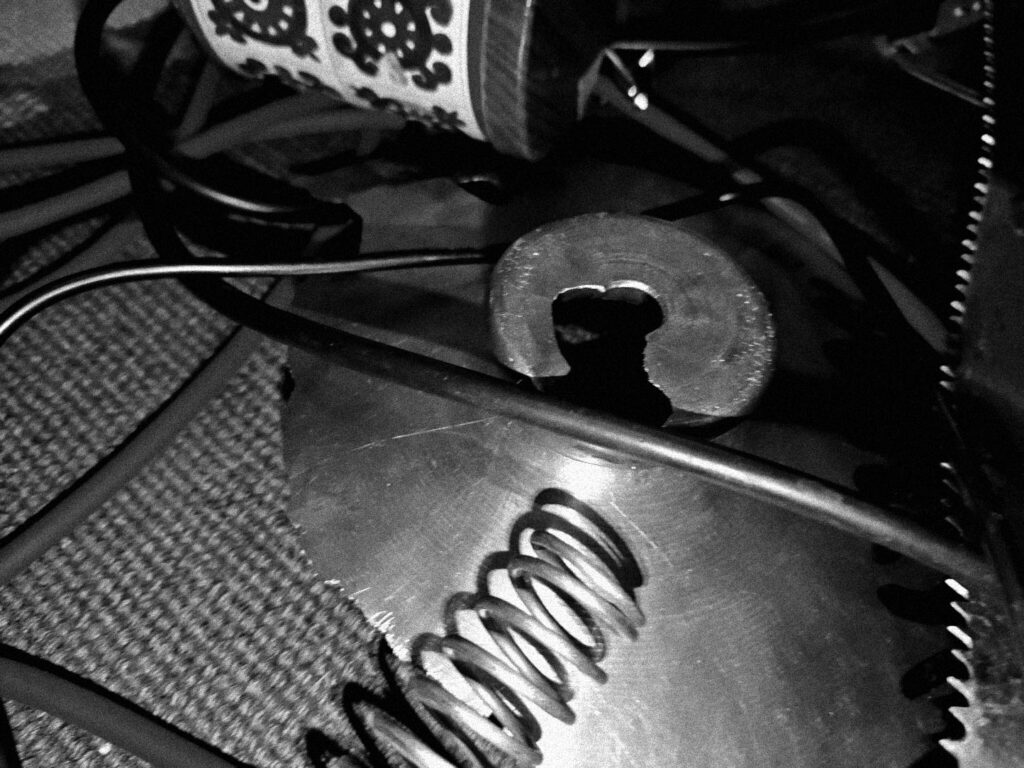
You occasionally make your releases’ artworks yourself. Do you have a “library” of suitable imagery to use when the need arises, or do you begin to look up stuff only when you need to create a new artwork? Are your artworks and track titles always created after the noise has already been made, or do you ever use visuals or themes as a starting point for creating the noise?
I do lot of event posters and graphics so I am pretty familiar with photoshop and all. So if I have some idea or just want to try some things randomly it is pretty easy. I don’t have an existing library on my computer. But I like to just seek random old photos, magazines and things like that from internet.
For Edge of Decay I am not very strict with the track titles or themes. Most of the time everything comes after the recording. Sometimes if I see a good photo it might give an idea for a track title or release name. Or maybe if I watch a movie or play a video game those can give me some good ideas too.
Then in August 2026, just a month before now when I’m writing these questions, you had a collaborative cassette with the Finnish project Atrophist out on the German label Fanalstatt. Before getting to the sound side of things: who made the artworks of this one?
That one was done by the abel because he did not really like our first idea which I sent him. Can’t say I blame him because you can appreciate a label if they have some idea of how their releases should look like. Sometimes it is easy to find artwork that everyone likes and sometimes not.
Similarly to your split with Scum, this collaboration titled Lihallisuuden Kulminaatio offers something very different from what I would’ve expected. The cassette focuses on murky, minimalist and atmospheric rumbles. Admittedly, the first time I put on the tape, I was preparing to send you hate mail as I thought the first few minutes sounded way too dull and amateurish for either of you. Luckily the tape soon picks up in quality, and by its end I was ready to send you compliments on making such an interesting tape that’s quite an experiment for both of your projects.
The tape has some similarity to mr. Atrophist’s project Iron Star, but is not too similar even to that. It is restrained and controlled, but manages to create variation and make a strong impact within its seemingly narrow parameters. What was your starting point for creating these tracks? Had you decided in advance that it would be something else than straight-up harsh noise, or how did the release turn out like this?
I have known Janne (Atrophist) a long time. He has helped a lot with Helsinki & Vantaa events and with my Melun Maa aka Land of Noise documentary. I just asked him should we do something. We both recorded some tracks and sent those to each other. Then the other recorded his own parts to them. No any big plans but more like just to see what happens. Even I was pretty suprised how mellow and ambient/drone sounding it became. I guess it has to be the most ambient record that is in the Edge of Decay catalog. But once again the final product is something that I would not have made alone. I always enjoy an outcome like that. It would be pretty boring if a collaboration album sounded exactly the same as you alone.
”Lihallisuuden Kulminaatio” can be my dark ambient / drone ambient record, hah. And still I think it has some Edge of Decay feeling in its core.
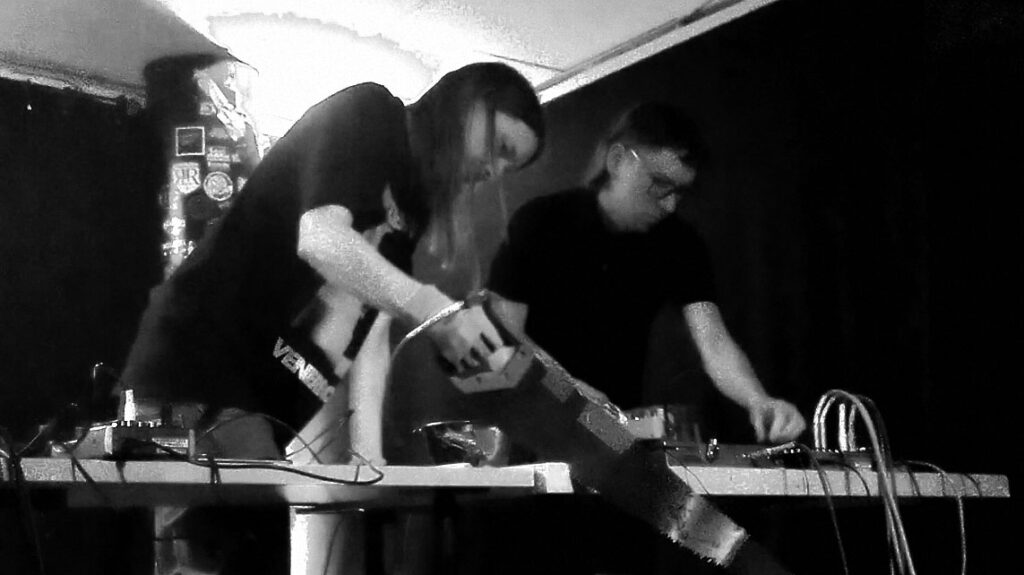
I think that brings us to the current moment of Edge Of Decay. I don’t want to derail this interview too much, but the earlier mentioned label New Approach Records just recently published a collaborative CD between your other project Vigilantism and Augmented Atrocity. I think you both rely on your strengths on that disc, so people with an interest in brooding heavy electronics might want to give that one a listen.
Considering how prolific you’ve been, it seems that noise remains inspirational for you after all these years. So, aside of the things already listed above: what’s new with your projects, and do you have any future plans that you could announce?
I have this new project in the works right now. It is called Oklep and it combines a lot of random samples, synth stuff, obscure melodies and other weird and noisy sounds. That material did not fit for my other projects so I wanted to give it a new name. I call it ”noise psychedelia” because that material moves and pulses in many strange directions. Oklep has already two releases coming out soon. Both of them are pretty different from each other. I also have plans to do live shows with that project.
Edge of Decay and Vigilantism are still going strong too. Lots of new releases and collaborations are coming! Stay dirty and make noise!
Edge of Decay releases can be bought at nhfastore.net
Vigilantism releases can be bought at nhfastore.net
Edge of Decay noise at: https://edgeofdecay.bandcamp.com